Compactor
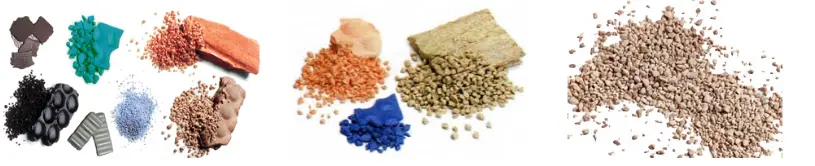
The ultimate goal of the compaction process is to transform powder into granules of various shapes and sizes.Typically, no binders are needed; compaction is achieved simply by applying a certain amount of pressure to the material. The pressure level depends on the material characteristics, and the final product will be processed to a specific thickness.
Kaizheng Company offers compact and complete turnkey systems (including electrical interlocks and interface controls) that integrate forming units to meet your specific needs.
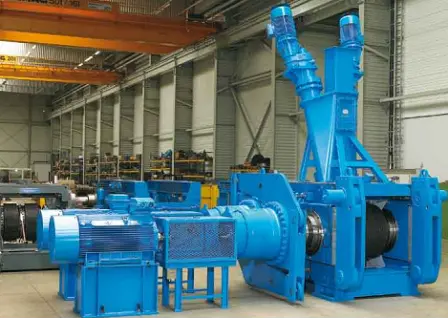
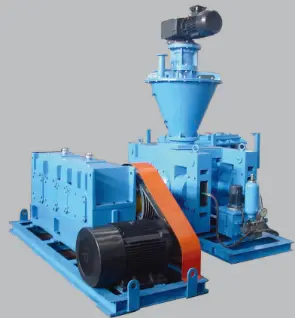
Compactor working Principle
The main structure of the compactor consists of a pair of counter-rotating rollers. One roller is fixed, while the other is a movable roller supported on the frame by a hydraulic system. The surface of the rollers is specially treated to ensure sufficient strength and wear resistance. When the material is continuously fed into or forced into the space between the rollers by a screw feeder, it is compacted into sheets.
Linear pressure is an important concept in the design of the compactor, defined as the pressure per unit width of the roller, with units of N/m or t/cm. We have extensive experience with the linear pressure of a considerable number of materials, while for new materials, we mainly determine the linear pressure through experimental methods.
According to the required material and the final product, the main stages of the compaction-granulation process can be as follows:
■ A preparation unit of a powder material (crushing, screening, drying, screening).
■ Batching, weighing and mixing units of each component.
■ The well-prepared powder was transformed into thin sheets by a compactor.
■ The granulation screening unit transforms the sheet into particles with the desired size (special crushing and screening).
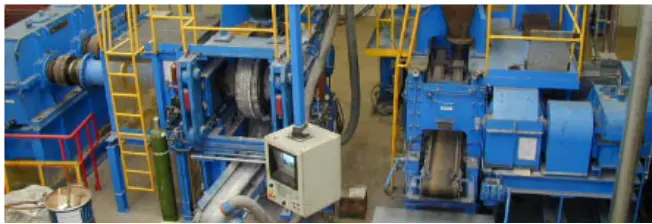
Compacting and Granulating Machine Applied material:
■ Chemicals (sodium carbonate, sodium chloride, sodium sulfate, sodium nitrate, ammonium chloride, ferric sulfate, calcium chloride, casting additives, etc.)
■ Fertilizer (PK, NPK, potassium chloride, potassium sulfate, ammonium sulfate, potassium nitrate, phosphorus, potassium ore powder...)
■ Chinese or western medicine
■ Detergent
■ Polymer
■ Activated charcoal is used to produce coal or charcoal
■ Oxide (uranium oxide, chromium oxide, iron oxide, zinc oxide...)
■ Minerals (lime, dolomite, magnesium oxide...)
■ Paint pigments
■ Nickel dust
■ Clay
■ Dry sludge
■ Catalyst...
Technical Features:
■ The transmission system has two configurations: for smaller models, it uses a motor-reducer-double output shaft synchronous gearbox with reduction-two pressure rollers; for larger models, it uses a dual motor-reducer-two pressure rollers. It features pure torque output.
■ The pressure roller assembly structure is designed according to the linear pressure ratio of the briquetting machine. It can be a large interference fit hot assembly, an expansion sleeve structure, or a fixed key structure. Special requirements may also utilize a segmented roller sleeve structure.
■ The rationally designed screw feeder, tailored to different materials, is an effective measure for achieving good product quality and reducing energy consumption.
■ The material of the pressure roller sleeve is also selected based on the material and linear pressure ratio. It can be bearing steel, mold steel, or stainless steel, with the ultimate goal of ensuring long service life and optimal cost-effectiveness.
Compacting and Granulating Machine Technical parameters:
Note: Referring to the material conditions and user requirements, the machine can be special roller granulator or triaxial granulator.

Where there is briquette, mixing, drying,
and related system solution,there is Kaizheng
Copyright@2024 Luoyang Kaizheng Environmental Protection Processing Equipment Co., Ltd